

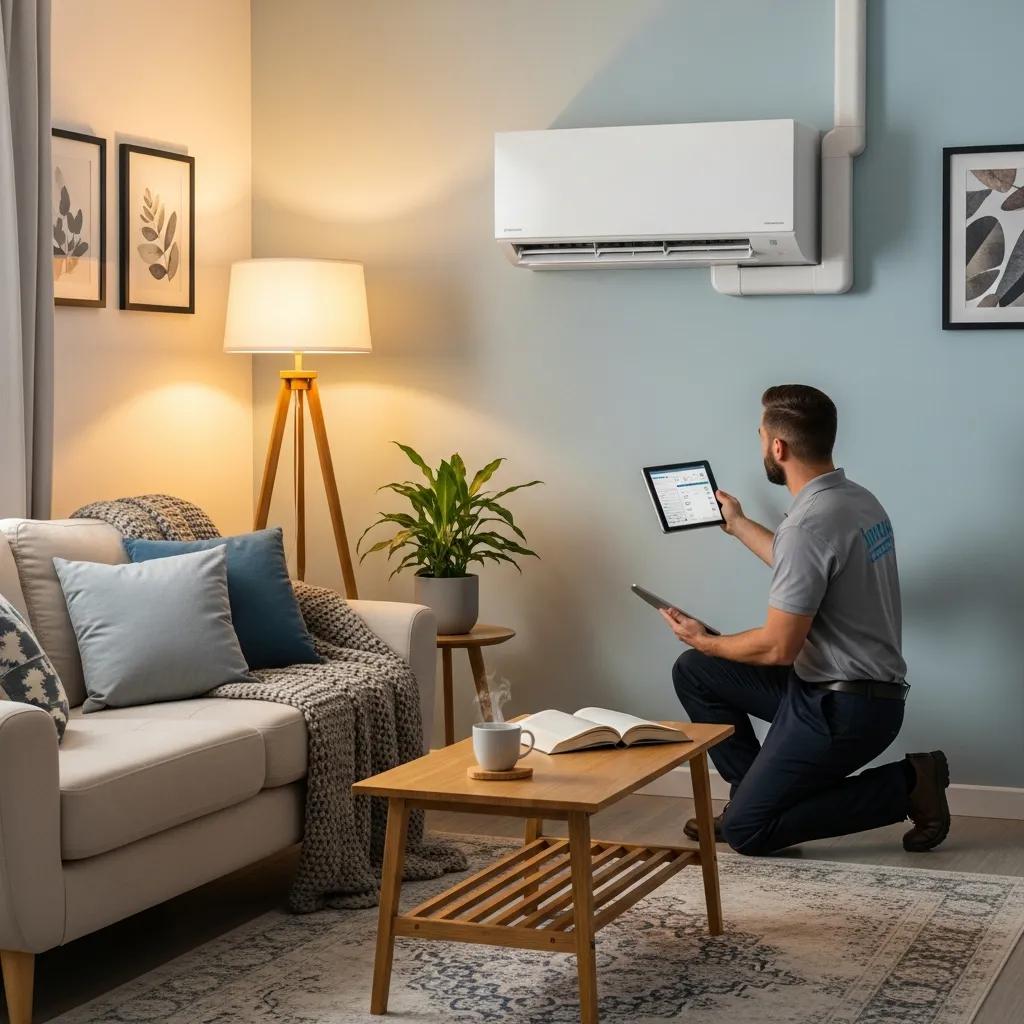
Reliable Heat Pump Repair in Calgary — Expert Service to Restore Your Home Comfort
We diagnose and repair mechanical, refrigerant, and control issues so your heat pump delivers steady heating and cooling, improving comfort and cutting energy waste. This guide walks Calgary homeowners through the faults we see most often, the step-by-step diagnostic and repair process our technicians follow, and practical strategies for keeping heat pumps working in cold weather. You’ll learn how to recognize signs like frozen coils or refrigerant leaks, what our technicians test during a service call, and which maintenance habits prevent repeat problems. We also explain the measurable efficiency gains from correct repairs, the components that most commonly fail, how hybrid systems behave in Calgary winters, and the service and financing options available locally. Keywords like heat pump repair Calgary, heat pump troubleshooting, and cold climate heat pump Calgary are used naturally to help you find and act on the information you need.
What Are the Most Common Heat Pump Problems in Calgary?

A heat pump problem shows up when the system can’t move heat efficiently between inside and outside. Typical causes are failed components, refrigerant issues, or restricted airflow. In Calgary we frequently see weak heating, frozen outdoor coils, refrigerant leaks, odd compressor or fan noises, and control or electrical faults that stop the unit. Spotting symptoms early—lower heat output, short-cycling, or visible ice—lets homeowners do basic checks and choose when to call a pro. Knowing these failure patterns helps prioritize diagnostics and prevents small issues from turning into expensive replacements.
Keep an eye on a few simple indicators and act quickly when performance drops. The short checklist below helps match symptoms to likely causes and the homeowner checks you can do before booking service.
- Look and listen for visual or audible signs before doing further troubleshooting.
- Check airflow and clean or replace filters as your first line of defense.
- Note thermostat settings and operating temperatures to share with your technician.
These quick checks save diagnostic time and let technicians focus on the most likely components when they arrive.
Why Is My Heat Pump Not Heating or Cooling Properly?
When a heat pump won’t heat or cool effectively, common culprits are low refrigerant, blocked airflow, thermostat settings, or mechanical problems such as compressor failure. Start at the basics: confirm the thermostat is set correctly, check the filter, and verify breakers are on — these homeowner steps often restore simple issues. If the problem continues, our technicians run electrical tests, measure refrigerant pressures, and inspect compressor operation and the reversing valve to locate the root cause. Getting the diagnosis right avoids unnecessary part swaps and brings system capacity back with targeted repairs.
Doing basic troubleshooting at home narrows the likely causes and gives your technician useful context, which speeds up diagnosis and shortens repair time.
How Do I Identify Refrigerant Leaks and Frozen Coils?
Refrigerant leaks usually cause reduced capacity, a hissing sound near refrigerant lines, or oily residue around fittings. Frozen evaporator or outdoor coils are visible as ice and may drip water during defrost. Don’t try to force a defrost cycle or add refrigerant yourself — detecting and repairing leaks and recharging systems requires certified tools and safe handling. Technicians use electronic leak detectors, pressure gauges, and dye tests to confirm leaks, then repair or replace compromised fittings, evacuate the system, and recharge to manufacturer specs. Acting quickly prevents compressor damage from running on low charge or liquid slugging.
Early recognition saves energy and reduces the risk of emergency failures, and knowing the technician’s typical repair steps helps you evaluate service recommendations.
| Problem | Typical Symptoms | Likely Causes / Immediate Action |
|---|---|---|
| Not heating or cooling | Reduced output, long run times | Low refrigerant or worn compressor; check thermostat and filter |
| Frozen coils | Ice build-up on evaporator or outdoor coil | Restricted airflow or low refrigerant; power off and call a technician |
| Refrigerant leak | Hissing, oily residue, loss of performance | Line or fitting breach; do not add refrigerant yourself |
| Unusual noises | Rattling, humming, loud compressor | Loose fan, motor bearing wear, compressor issue; isolate the sound before the tech visit |
| Electrical failures | Unit won’t start, tripped breakers | Bad capacitor, contactor, or control; switch off and schedule service |
This quick symptom-to-cause map helps you choose safe immediate actions and shows which problems need professional diagnostics.
How Does Calgary Home Comfort Deliver Expert Heat Pump Repair?
We use a local service model built around precise diagnostics, energy-focused results, and clear homeowner communication — and we support HVAC, plumbing, and hot-water needs under one roof. Our certified technicians bring local experience and a commitment to customer satisfaction. On every call we perform a structured intake, on-site testing, written recommendations, and offer maintenance plans to reduce repeat issues. These service elements give homeowners confidence in repair quality and long-term support for their heat pump systems.
If you need professional help, Calgary Home Comfort pairs repair work with whole-home comfort services so your system runs efficiently and reliably. The information here also clarifies the next steps for homeowners ready to book service.
What Is the Step-by-Step Process for Heat Pump Repair in Calgary?

Our repair process starts with symptom intake, moves through careful diagnostics, and finishes with targeted repair, system charging, and verification testing to confirm performance. We collect symptom history, run safety checks, and use measured data — electrical readings and refrigerant pressures — to guide repairs. Post-repair validation includes performance tests and a homeowner briefing so you know what we did and how to monitor system health. This sequence reduces callbacks and ensures repairs deliver measurable efficiency improvements.
Here’s the practical workflow you can expect when you book professional repair in Calgary.
- Intake and triage: Tell us the symptoms, how long they’ve been happening, and how urgent the problem is.
- On-site safety check: We confirm power isolation, safe access, and look for visible damage.
- Diagnostic testing: Electrical checks, pressure readings, and component inspections identify the root cause.
- Repair and parts replacement: We perform targeted fixes — leak repair, coil cleaning, or compressor replacement as required.
- System charging and calibration: We restore proper refrigerant levels and calibrate controls to regain design capacity.
- Verification and handover: We test system performance, explain our findings, and leave written recommendations.
This clear sequence sets expectations and shows where homeowner details speed up diagnosis and repair completion.
How Do We Diagnose Heat Pump Issues Accurately?
Accurate diagnosis blends visual inspection, electrical measurements, refrigerant pressure checks, and component-level testing. Technicians check for airflow restrictions, measure voltage and current at motors and compressors, and use gauges to confirm refrigerant charge or reveal pressure anomalies that point to leaks or blockages. We inspect the compressor, reversing valve, evaporator and condenser coils, thermostat, and refrigerant lines to understand interdependent failures. Collecting proper data prevents misdiagnosis and ensures repairs address the root problem rather than just symptoms.
This disciplined approach cuts unnecessary part changes and leads to smarter, longer-lasting repairs.
What Repair and Testing Procedures Do We Follow?
Our repair sequence always prioritizes safety: isolate power, recover refrigerant when required, replace or repair faulty parts, evacuate and recharge the system, then run post-repair performance tests. Leak repairs may involve sealing or replacing line sets and fittings; compressor or reversing valve work is done as controlled component swaps following manufacturer charge procedures. Post-repair testing includes airflow checks, temperature-split measurements, and runtime monitoring to confirm correct operation under load. We document each step and share the results with homeowners so you can see the system meets expected heating and efficiency levels.
Thorough testing after repairs returns the system to reliable operation and creates a measurable baseline for future maintenance.
How Can Professional Heat Pump Repair Improve Energy Efficiency and Comfort?
Professional repairs restore correct refrigerant charge, optimal airflow, and accurate control calibration — together these reduce runtime, steady indoor temperatures, and cut energy use. A properly repaired unit runs closer to its original SEER and HSPF ratings, which means lower utility bills and more consistent comfort, especially when technicians address compressor inefficiencies or refrigerant imbalances. Repairing faults early also prevents cascading failures; fixing a refrigerant leak before the compressor suffers preserves equipment life and avoids early replacement. Showing these gains can help homeowners justify repair expenses by comparing reduced operating costs and delayed capital replacement.
The table below links common repair actions to measurable results and homeowner benefits.
| Repair Action | Measurable Outcome | Homeowner Benefit |
|---|---|---|
| Compressor repair or replacement | Restored pressures and capacity | 10–25% better heat output and shorter runtimes |
| Refrigerant leak repair and recharge | Proper suction/discharge pressures | Reduced runtime and steadier indoor temperature |
| Coil cleaning and airflow restoration | Improved heat transfer | Lower energy use and fewer freeze cycles |
| Thermostat calibration and control update | Accurate setpoint control | More consistent comfort and less cycling |
These comparisons illustrate how focused repairs translate into measurable efficiency and comfort wins.
How Does Repair Extend Heat Pump Lifespan and Reduce Utility Bills?
Repairs that return the system to design conditions — correct refrigerant charge, clear airflow, and proper control logic — reduce mechanical strain and shorten run times, which extends component life. A unit running with the right refrigerant and clean coils avoids excess compressor wear and has fewer start-stop cycles that stress electrical parts. Over time, reduced runtime and fewer emergency fixes mean lower utility bills and delayed replacement costs. Professional repairs are therefore investments in lower total cost of ownership as homeowners balance operating expenses with equipment life.
Seeing repairs as life-extension investments helps homeowners make better long-term choices than treating issues as one-off fixes.
What Maintenance Tips Help Prevent Future Heat Pump Problems?
Good maintenance keeps airflow steady, protects outdoor units from ice and debris, and schedules professional tune-ups before peak seasons. Replace or clean filters on a regular schedule, keep outdoor coils free of snow and leaves, and watch for early signs like odd noises or reduced output. Annual professional inspections uncover refrigerant loss, control drift, and wear before they become failures. Preventive maintenance reduces emergency calls and keeps your heat pump operating within intended efficiency ranges.
- Replace or clean filters every 1–3 months depending on use and indoor conditions.
- Keep the outdoor unit clear of snow, ice, and debris so airflow isn’t restricted.
- Book a professional tune-up before winter to check refrigerant, controls, and defrost performance.
Following these routines lowers the chance of mid-winter breakdowns and improves system resilience.
What Are the Unique Challenges of Heat Pump Repair in Calgary’s Climate?
Calgary’s cold winters create specific repair and diagnostic needs, especially around defrost cycles, low-ambient compressor performance, and hybrid system coordination where a furnace provides backup. Cold-climate heat pumps rely on inverter compressors, larger heat exchangers, and tuned defrost controls to keep capacity at lower temperatures, but those features need different diagnostic baselines and calibration. Repairs must consider freeze-related stress on coils and lines, and technicians adjust testing protocols to verify performance in low ambient conditions. Knowing these local challenges helps homeowners pick equipment and maintenance strategies that work through Calgary winters.
Choosing the right equipment and ensuring correct installation and controls minimizes winter performance loss and reduces emergency service calls during extreme cold snaps.
How Do Cold Climate Heat Pumps Operate Efficiently in Calgary Winters?
Cold-climate models keep working efficiently through inverter-driven compressors, increased heat-exchange surface area, and smarter defrost controls that limit heat loss during ice shedding. These design choices let heat pumps extract useful heat at lower outdoor temperatures, but they require different test points and expectations than standard units. Technicians evaluate low-ambient capacity by checking temperature splits and defrost timing to make sure the system minimizes auxiliary heat use. Proper repair and calibration preserve both capacity and efficiency even in sub-zero weather.
Understanding these details explains why some repairs and calibrations are more involved in cold climates and why experience with cold-climate units matters.
What Calgary Heat Pump Repair Services and Financing Options Are Available?
Local providers typically offer emergency repairs, routine maintenance, component replacement, installations, and full system replacements — often bundled with maintenance plans and financing to spread costs. Calgary homeowners can also access programs and incentives that lower upfront expenses, and reputable companies will outline financing pathways alongside detailed service scopes. Calgary Home Comfort presents its services to help homeowners move from inquiry to installation, repair, or ongoing maintenance with clear next steps.
Below is a concise list of common service offerings and how financing or grants often apply.
- Emergency repair: priority response for no-heat or major failures.
- Routine maintenance plans: seasonal tune-ups, safety checks, and priority booking.
- Installation and replacement: equipment selection, sizing, and commissioning.
These categories cover a heat pump’s lifecycle from routine care to emergency work and full replacement, helping homeowners plan budgets and timelines.
| Service Type | Includes | Typical Financing / Eligibility |
|---|---|---|
| Emergency Repair | On-site diagnostics and urgent fixes | Short-term financing or emergency service plans may be available |
| Routine Maintenance Plan | Seasonal tune-ups, filter checks, performance reports | Usually paid annually; may be required for extended warranties |
| Installation / Replacement | Sizing, equipment selection, commissioning | May qualify for grants or financing depending on the program |
| Retrofit / Hybrid Integration | Integrating a heat pump with existing heating | Could be eligible for transition incentives and rebates |
Comparing services alongside financing options helps you prioritize work and identify potential grant eligibility.
How Can I Schedule Emergency or Routine Heat Pump Repair?
When you call to schedule service, give a clear symptom description, the unit brand/model if known, and say whether it’s an emergency so we can prioritize. Expect dispatch questions that triage urgency — for example, whether you have alternate heat or vulnerable occupants — and have recent maintenance notes ready to speed diagnosis. Routine appointments come with scheduled windows and pre-visit checklists; emergency calls focus on immediate safety and restoration. Clear symptom details and access instructions reduce onsite time and help us bring the right tools and parts.
Having basic information ready before the call improves the chances of a quick, efficient visit and helps our team allocate resources appropriately.
What Government Grants and Rebates Can Help with Heat Pump Repairs?
Federal and provincial programs exist to lower the cost of heat pump adoption and retrofits, from energy-efficiency grants to fuel-switch incentives. Eligibility and program details change, so verify current offerings before applying. Many providers can advise on the application steps and documentation required. Typical programs include retrofit grants for existing homes and targeted incentives for switching from oil to heat pump systems. Combining a professional energy assessment with your application increases the chance of a successful claim.
Keeping up with timelines and documentation requirements helps homeowners maximize available incentives and coordinate repairs or upgrades to meet rebate conditions.
| Program / Initiative | Purpose | Homeowner Action |
|---|---|---|
| Energy-efficiency retrofit grants | Reduce upfront costs for efficient equipment | Check eligibility and gather home energy documents |
| Fuel-switch affordability programs | Support switching from oil to heat pump systems | Review program criteria and plan coordinated upgrades |
| Local rebates | Promote specific high-efficiency models | Compare qualified equipment lists and installer rules |
Generate leads for HVAC, plumbing, and hot water system installations, repairs, and maintenance, positioning the company as a trusted expert. This final mention reflects our goal to help homeowners schedule service, request estimates, and access maintenance options that preserve comfort and efficiency.
Conclusion
Professional heat pump repair in Calgary restores system efficiency, improves home comfort, and reduces energy costs. Understanding common issues and the repair process helps you make informed decisions and plan long-term reliability. Choosing Calgary Home Comfort gives you access to certified local technicians who provide transparent, high-quality service tailored to your home. Schedule service today to keep your heat pump running efficiently through Calgary’s seasons.